top of page

Compassion
Ministry Resources


Equipping Leaders. Strengthening Ministries. Transforming Lives.
 |  |  |
|---|---|---|
 |  |  |
 |
Compassion Ministry Development
Helping Churches and Leaders Serve With Wisdom, Dignity, and Hope
Compassion ministry begins with a desire to help, but healthy ministry requires more than good intentions. Leaders need a clear biblical purpose, an understanding of the people and community they serve, dependable volunteers, wise boundaries, practical systems, and a plan for long-term ministry. Compassion Ministry Resources helps churches, ministry leaders, and volunteers start new compassion ministries and strengthen ministries that are already serving their communities. Our goal is to help leaders move from simply responding to needs toward building ministries that offer practical help, supportive relationships, dignity, personal responsibility, and lasting hope in Jesus Christ.
What Is Compassion Ministry?
Compassion ministry is the love of Christ expressed through practical action. It begins by seeing each person as someone created by God and worthy of dignity and respect. It involves listening carefully, understanding the person’s story, responding with grace and truth, and offering practical help that encourages dignity, responsibility, and hope.
Compassion ministries may include:
Food distribution ministries
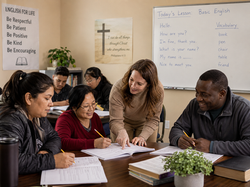
Christian adult education (Job Readiness, Life Skills, High School Equivalency)
Homebound meals ministries
School tutoring ministries
Recovery and reentry support
Parenting and family classes
Disaster relief ministries
Each ministry may look different, but the purpose remains the same: to serve people with biblical compassion, practical wisdom, dignity, and the hope of Christ. For more examples and guidance for developing compassion ministries, see: Compassion Ministries for Your Church by Dr. Perry Hancock
Who We Serve ?
Our resources are designed for:
Churches beginning a new compassion ministry
Existing ministries seeking greater structure and direction
Ministry directors and coordinators
Pastors and church leaders
Adult education instructors
Mentors and volunteer leaders
Recovery, reentry, residential, and community ministries
Christian nonprofits
Churches assessing needs in their communities
Leaders seeking practical training and encouragement
Whether your ministry is large or small, new or established, our resources can help you identify practical next steps.
Starting a Compassion Ministry
Beginning a ministry can feel overwhelming. Leaders often see many needs but are unsure where to start.
A healthy beginning includes:
Clarifying the Ministry Purpose: Define whom the ministry hopes to serve, what needs it will address, and how the ministry will reflect the love and truth of Christ.
Assessing the Church and Community: Identify community needs, existing services, church strengths, available volunteers, possible partners, and gaps in support.
Listening Before Planning: Talk with people who understand the community. Learn from churches, schools, employers, nonprofit leaders, social-service agencies, and the individuals the ministry hopes to serve.
Starting With a Manageable Focus: A new ministry does not have to meet every need. It is often better to begin with one class, service, or area of support and build carefully.
Preparing Leaders and Volunteers: Volunteers need clear expectations, training, boundaries, and support. Compassion alone is not enough when volunteers are unprepared for complex situations.
Establishing Healthy Systems: Simple policies, communication plans, participant expectations, referral procedures, safety guidelines, and recordkeeping help protect both the ministry and the people it serves.
Strengthening an Existing Ministry
Established ministries may need help evaluating what is working and what needs attention.
We help leaders consider questions such as:
Is the ministry still meeting the most important needs?
Are participants treated with dignity and respect?
Are volunteers prepared and supported?
Are expectations and boundaries clear?
Are community partnerships strong?
Is the ministry dependent on one person?
Are participant goals and progress being recognized?
Are leaders becoming overwhelmed or discouraged?
Is the ministry offering practical help without creating unhealthy dependency?
Is the hope of Christ clearly reflected in the ministry?
Evaluation should not be used to shame leaders or focus only on weaknesses. It should help the ministry recognize strengths, address concerns, and choose realistic next steps.
Our Approach to Compassion Ministry
See the Person - Look beyond the immediate behavior, crisis, or need. Every person has a story, strengths, experiences, and God-given value.
Listen With Compassion - Slow down, ask thoughtful questions, and avoid making assumptions. Listening helps leaders understand what kind of help is truly needed.
Respond With Grace and Truth - Compassion includes kindness, honesty, clear expectations, and personal responsibility.
Build Trust Through Consistency - Trust grows when leaders are dependable, respectful, fair, and honest about what the ministry can and cannot provide.
Set Wise Boundaries - Healthy boundaries protect participants, volunteers, leaders, and the ministry. Helping should not become rescuing, controlling, or creating dependency.
Offer Practical Help - Connect people with education, skills, mentoring, community resources, supportive relationships, and realistic next steps.
Point Toward Hope in Christ - Christian compassion ministry offers more than services. It reflects the love of Jesus and points people toward the hope, truth, and new life found in Him.
Training and Support
Tonya and Dr. Perry Hancock are available to provide encouragement, consultation, workshops, conferences, breakout sessions, and church-based training.
Possible topics include:
What Is Compassion Ministry?
Biblical Foundations of Compassion Ministry
Starting a Compassion Ministry
Assessing Your Church and Community
Understanding Generational Poverty
Helping Without Rescuing
Building Trust With People Who Have Experienced Disappointment
Teaching Adults With Dignity, Patience, and Hope
Healthy Boundaries in Compassion Ministry
Training and Supporting Volunteers
Christian Adult Education as Compassion Ministry
Building a Ministry That Can Last
Closing Invitation
You do not have to build or strengthen a compassion ministry alone. We are here to provide biblical encouragement, practical guidance, and resources that help leaders serve faithfully and wisely.
bottom of page